SIM: Group Approximations and their Applications in the Age of AI
Overview
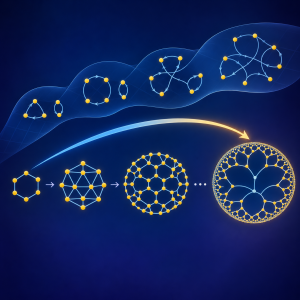 When a group can be approximated by well behaved objects, it is often easier to prove various things about it. The most well known example in this context is Gromov’s proof that Sofic groups (which are those whose Cayley graph has an approximation by finite Schreier graphs) satisfy Gottschalk’s conjecture. Following Gromov, many other conjectures were shown to hold for Sofic groups, and various other group approximation properties were studied and utilized. The following (up to recently open) major problem (often associated with Gromov and Weiss) was, if we may dare say, almost embarrassing for the community: Are all groups Sofic?
In a recent series of breakthroughs, not only that a non-Sofic group was finally shown to exist, but we now have three independent methods for proving that, and only the first of these methods was inspired by previous approaches to the problem (due to Kun and Thom). These breakthroughs use methods and approaches from various fields, in particular from finite geometry and combinatorics, including the finite Kakeya problem, the theory of error correcting codes and more. Furthermore, many use cases of Soficity were shown recently to either be true in general or to be false for some groups. The goal of this mini-workshop is to discuss, digest and hopefully deeply understand these recent developments, with the hopes it will lead to further breakthroughs and to a more complete theory of group approximations.
This event is part of the Simons Intensives in Mathematics (SIM), a series of IPAM events designed to stimulate and promote latest developments in mathematics and adaptation to AI.
This event is by invitation only.
Organizing Committee
Loading organizing committee…