Quantum Winter School 2027: Quantum Research in the Age of AI
Speaker Bios
|
|
Shuxiang Cao (NVIDIA)
Shuxiang Cao is a senior research scientist at NVIDIA, focusing on agentic AI for scientific applications. He previously served as a Schmidt AI in Science Fellow in the Department of Physics and an associate research fellow at Reuben College, University of Oxford, where he earned his DPhil in superconducting quantum processors and quantum algorithms. He is also a co-founder of Rahko Limited, applying AI to quantum systems and molecular modeling for drug discovery.
|
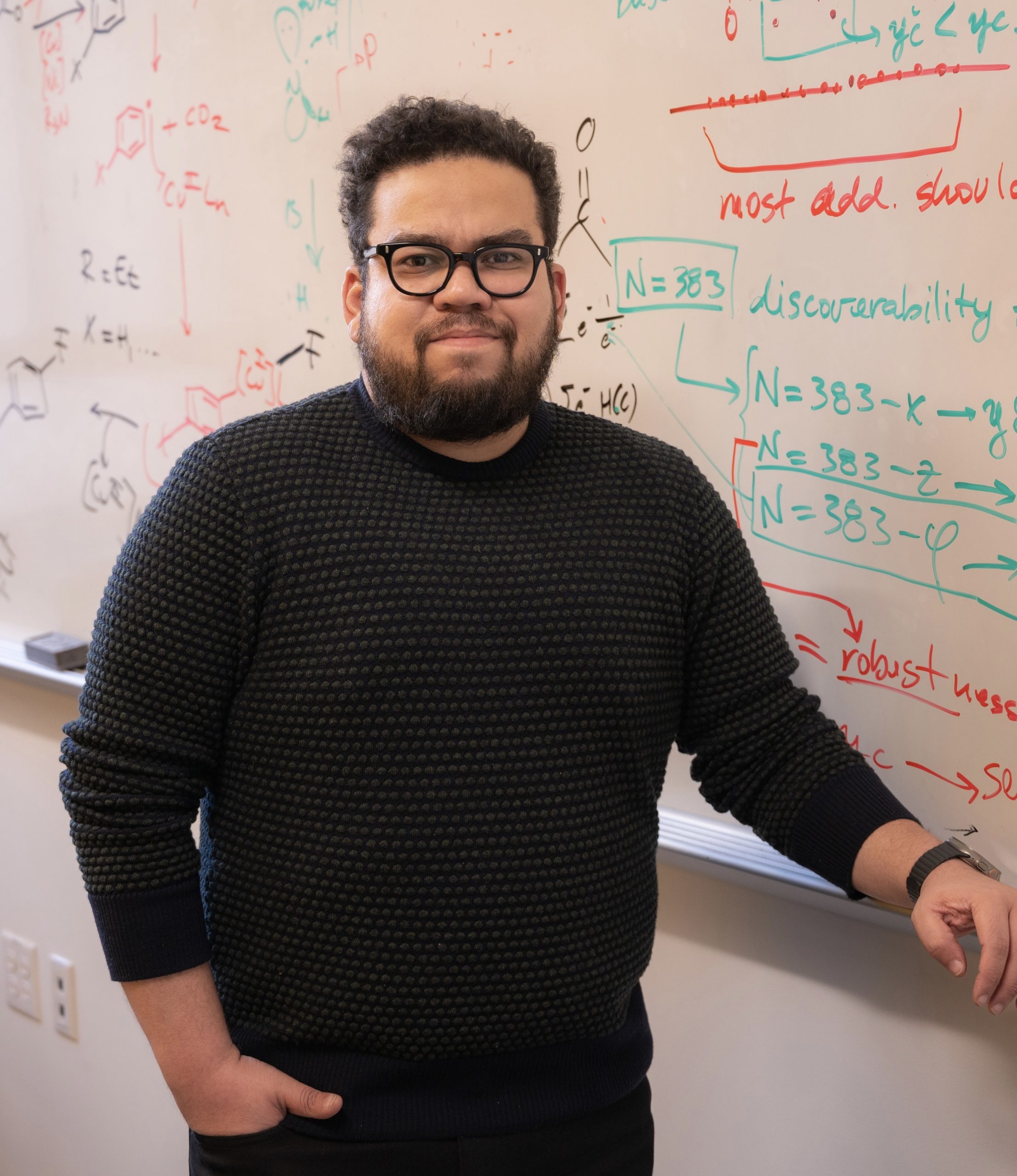 |
Gabriel Gomes (Carnegie Mellon University)
Gabe Gomes is an Assistant Professor in the Departments of Chemistry and Chemical Engineering at Carnegie Mellon University, with a faculty affiliation in Machine Learning. His group combines computational chemistry, machine learning, and automation to study chemical reactivity and develop tools for molecular prediction and experimentation. He received his PhD from Florida State University with Igor Alabugin and was a Banting Postdoctoral Fellow with Alán Aspuru-Guzik at the University of Toronto. He is currently on leave from CMU as a Research Scientist and Visiting Faculty at Google X. |
|
|
Adam Holmes (NVIDIA)
Adam is a quantum error correction and quantum information research scientist, interested in designing and characterizing new quantum error correcting codes, protocols for performing encoded logic, QCVV methods for characterizing physical qubits in QEC-meaningful ways, architectures supporting wide ranges of quantum applications, and designing efficient quantum algorithms. He completed his undergraduate education at Cornell University in physics, and his Ph.D. at the University of Chicago in Professor Fred Chong’s research group. He spent several years at Intel Labs in the quantum theory and architecture group, and most recently spent five years with HRL Laboratories. There, he worked on many programs ranging from DARPA’s Quantum Benchmarking program designing efficient accelerated quantum-classical workloads, to QEC and architecture projects, and to multi-qubit QCVV for designing reduced error models for exchange-only silicon spin qubits. |
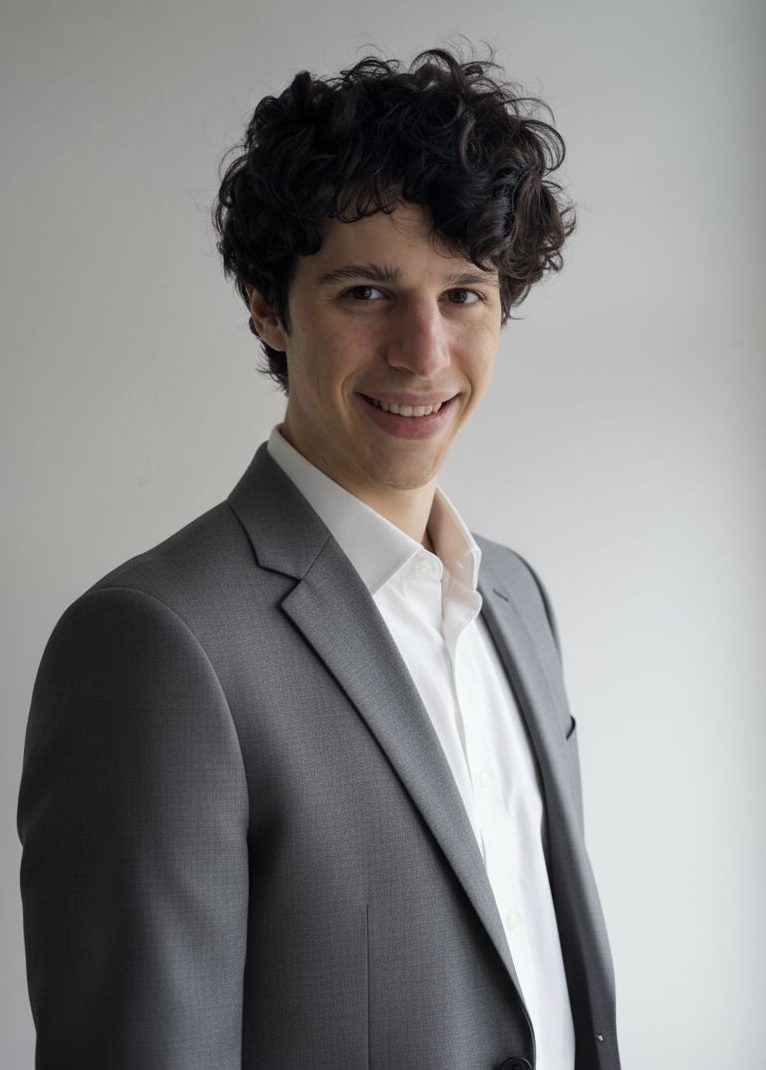 |
Adrien Moulart (Arcas Agentic)
Adrien Moulart is co-founder and technical lead of Arcas Agentic, an AI implementation partner for European companies. Arcas builds custom AI systems from containerised modules and finds the right hosting environment for each client, across industries such as legal publishing, financial services and telecommunications. A focus of his work has been designing and refining personalised knowledge-management systems compatible with any agent harness or language model, enabling zero-data-retention inference to meet Europe’s strict privacy requirements and suit work with sensitive data. Before specialising in AI implementation, he worked on machine learning for biological data, with a thesis on unsupervised computer vision at ETH Zurich. |
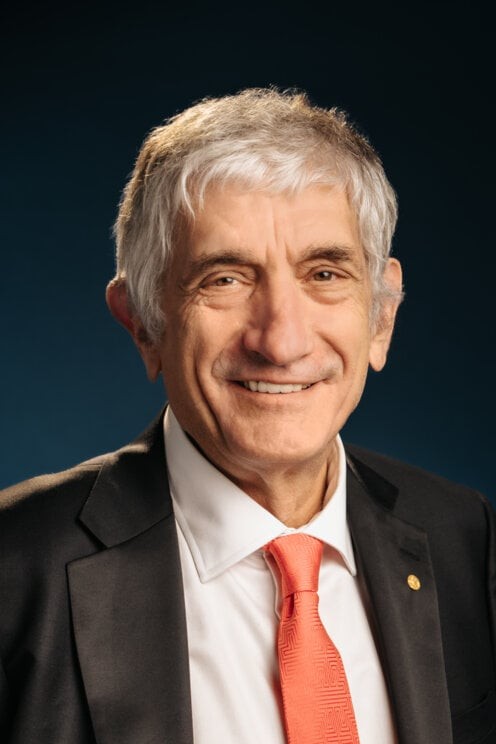 |
John Martinis (University of California, Santa Barbara & Qolab)
John Martinis is Professor Emeritus of Physics at UC Santa Barbara and co-founder and Chief Technology Officer of Qolab. His research focuses on superconducting quantum circuits and the development of scalable quantum computers. He shared the 2025 Nobel Prize in Physics with John Clarke and Michel Devoret for discovering macroscopic quantum tunnelling and quantized energy levels in an electric circuit. He received his Ph.D. in physics from UC Berkeley in 1987 and later led Google’s quantum hardware team, whose Sycamore processor made the first claim to quantum supremacy in 2019.
|
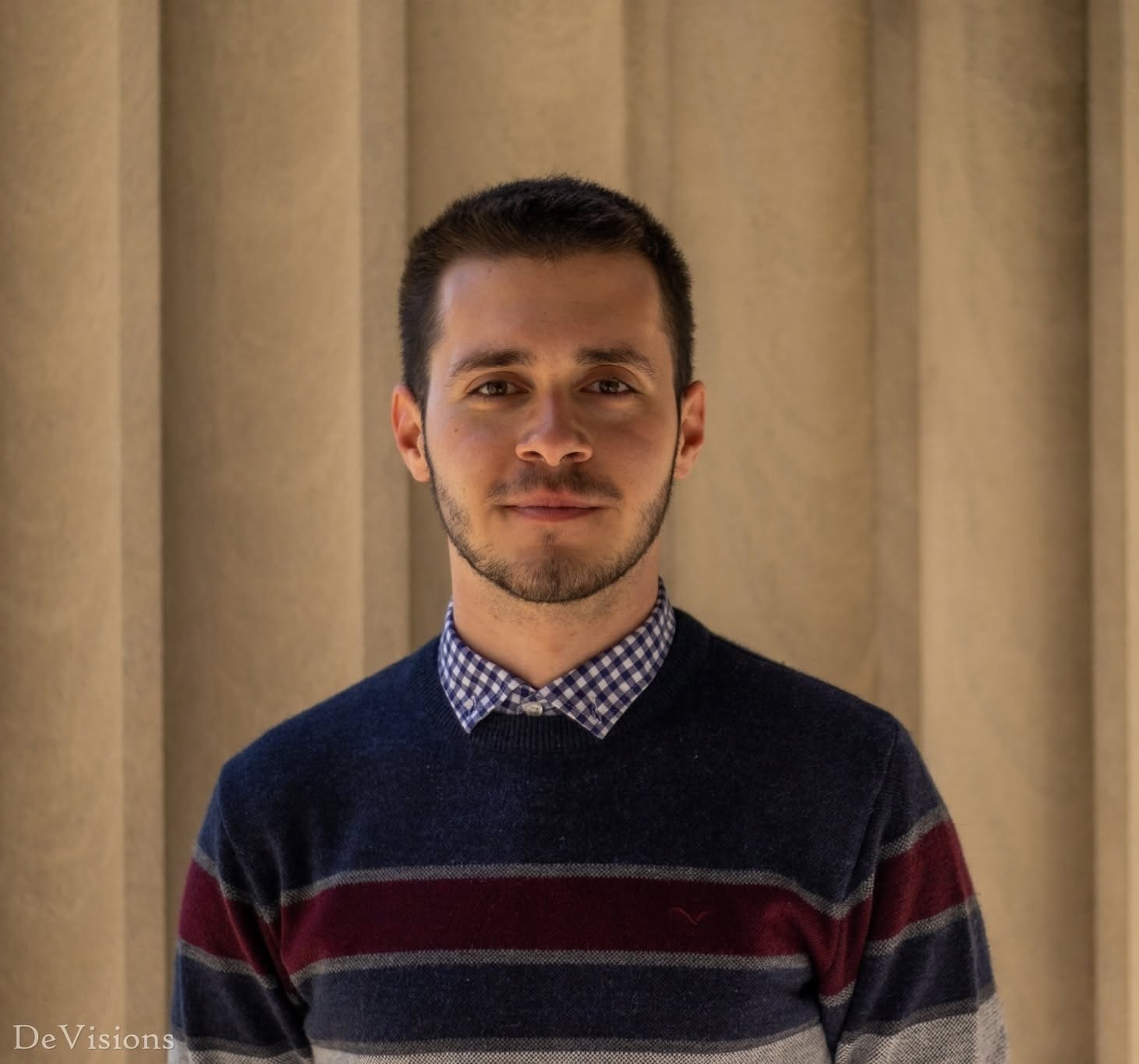 |
David Turturean (Physical Superintelligence)
David Turturean is a Member of Technical Staff at Physical Superintelligence (PSI), where he develops autonomous AI systems for mathematical and scientific research. He built the research system behind PSI’s proof of the Aaronson–Ambainis conjecture, a longstanding problem in quantum complexity theory, with a complete formalization in Lean. His work also includes AI-assisted solutions to Erdős problems, contributions to FrontierMath’s Open Problems benchmark, and results in quantum information theory. His research combines mathematical discovery with rigorous verification, developing methods for directing AI agents and checking their arguments using formal proof assistants. |
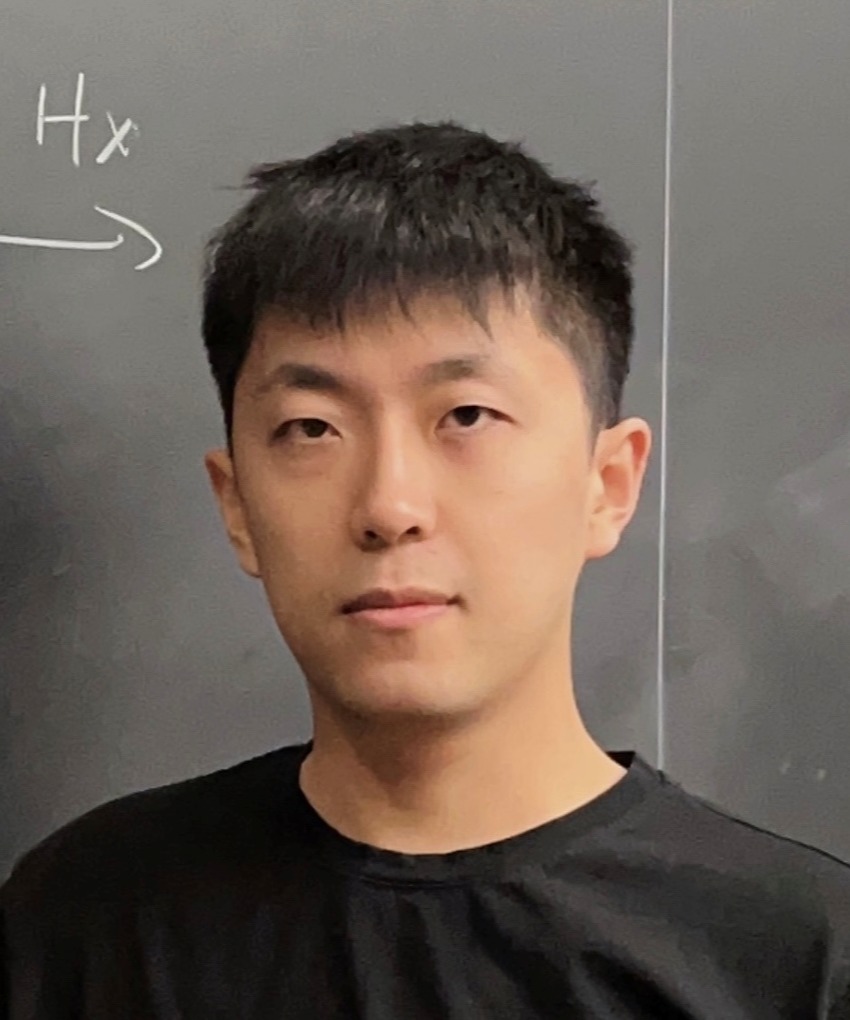 |
Qian Xu (Oratomic & University of California, Berkeley)
Qian Xu is a research scientist at Oratomic and an incoming assistant professor of Electrical Engineering and Computer Sciences at UC Berkeley. He received his Ph.D. in Quantum Science and Engineering from the University of Chicago in 2024 and was previously a Sherman Fairchild Postdoctoral Fellow at Caltech. His research focuses on quantum error correction, fault-tolerant quantum computing, and scalable quantum architectures. |
Organizing Committee
Loading organizing committee…