
Accelerating Math and Theoretical Physics with AI
Speakers and Panelists
Speakers
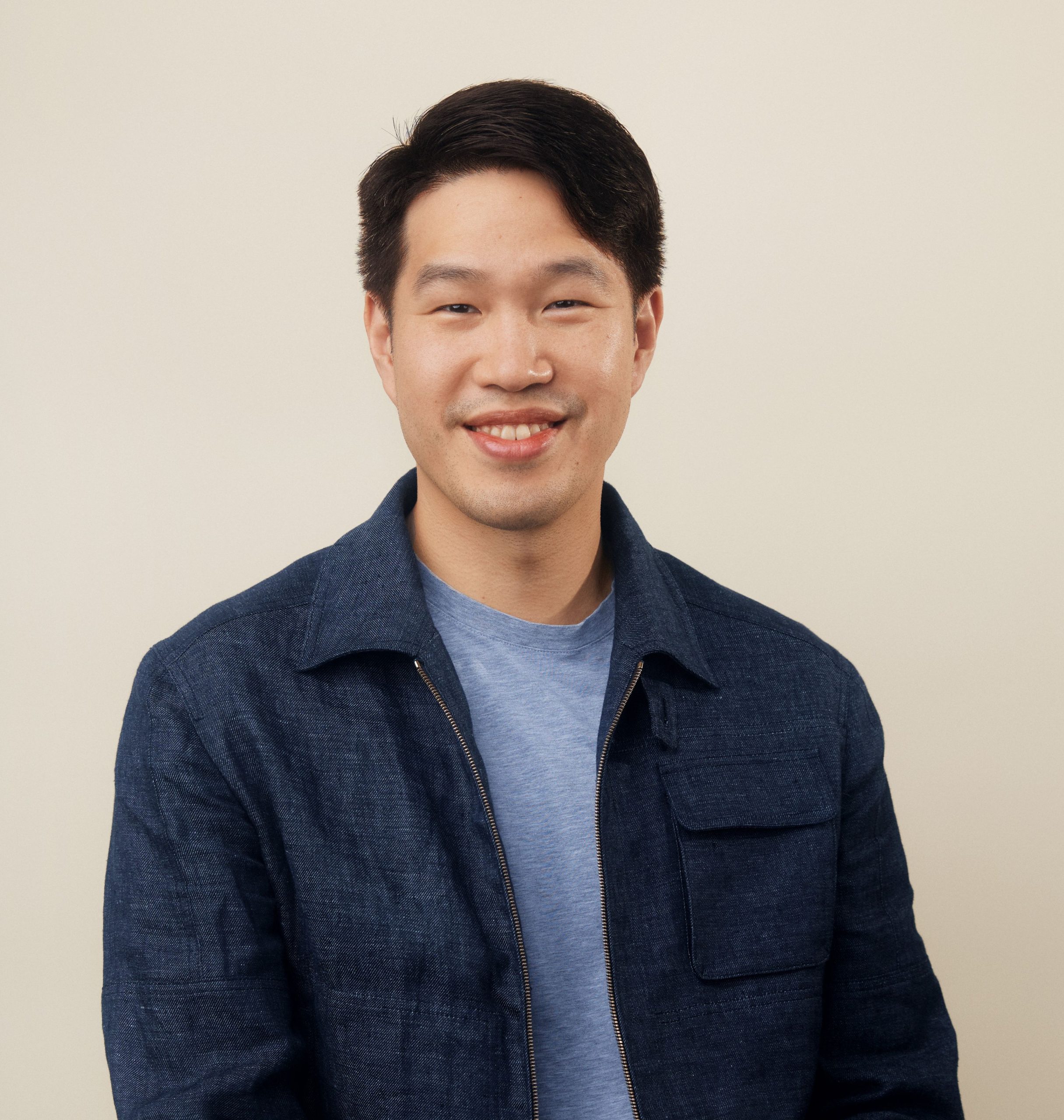
Mark Chen
Mark Chen is the Chief Research Officer at OpenAI, where he leads the company’s research initiatives, focusing on advancing artificial intelligence capabilities and ensuring the safe integration of AI technologies into products. Since joining OpenAI in 2018, Chen has been instrumental in developing significant AI models, including DALL·E, Codex, and GPT-4, contributing to the evolution of multimodal reasoning and scaling paradigms in AI. His leadership in research has been pivotal in translating scientific advancements into practical applications, enhancing the accessibility and functionality of AI systems. Before his tenure at OpenAI, Chen worked as a quantitative trader at Jane Street Capital, where he applied machine learning techniques to financial markets. He holds a bachelor’s degree in mathematics with computer science from the Massachusetts Institute of Technology (MIT) and has served as a coach for the USA Computing Olympiad team, reflecting his commitment to fostering talent in the field of computer science.
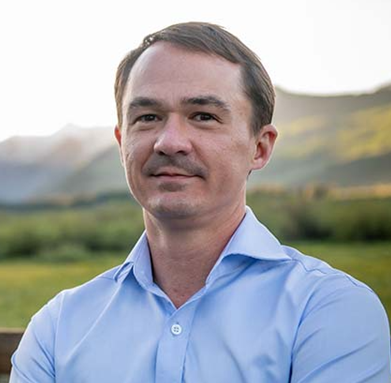
Nathaniel Craig
Nathaniel Craig is a professor at the University of California, Santa Barbara and leader of the Particle Theory Initiative at the Kavli Institute for Theoretical Physics. Born in Hawaii and raised in California, he studied physics at Harvard, Stanford, Rutgers, and the Institute for Advanced Study before joining the UCSB faculty in 2014. His research spans a broad range of topics in theoretical physics, from the Higgs boson and physics beyond the Standard Model to machine learning and quantum field theory. He has played key roles in the latest European and American decadal surveys in particle physics and catalyzed interest in a US-based muon collider as lead author of the Muon Smasher’s Guide. His work has been recognized by awards from the Department of Energy, the Research Corporation for Science Advancement, and the Blavatnik Foundation, among others.
Lance Dixon
Lance Dixon grew up in the Los Angeles area, was an undergraduate at Caltech, and received his PhD in Physics in 1986 from Princeton University on orbifold compactifications of string theory. In the early 1990s, Dixon pivoted from string theory to the study of quantum scattering amplitudes with Zvi Bern (UCLA) and David Kosower (UCLA), a very fruitful collaboration recognized by the J.J. Sakurai Prize of the American Physical Society and the Galileo Galilei Medal of the INFN. Dixon’s work has been instrumental for precision physics at the Large Hadron Collider at CERN, where quantum chromodynamics (QCD) dominates. In the past decade, Dixon has focused on a cousin of QCD (planar N=4 SYM) where analytic computations can be pushed much further, resulting in copious “theoretical data” that is structured like language. His current goal is to understand the all-orders behavior of this theory, using both machine learning (AI) and traditional methods (HI). Dixon is a member of the National Academy of Sciences and the American Academy of Arts and Sciences, and is a Professor Emeritus at SLAC/Stanford University.
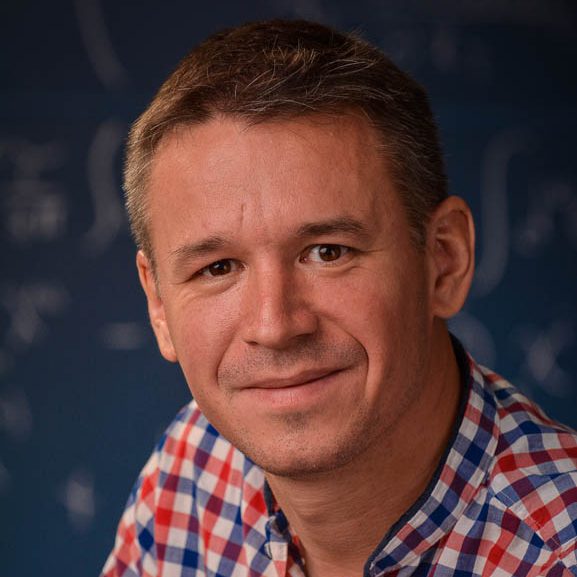
Sergei Gukov
After receiving his PhD from Princeton University, Sergei Gukov spent five years at Harvard University as a research fellow of the Clay Mathematics Institute and two years at the school of mathematics at the Institute for Advanced Studies, Princeton. His passion is building new bridges between different areas of mathematical physics and pure mathematics, such as quantum topology, mirror symmetry, and gauge theory. His more recent interests involve new connections between mathematics and machine learning.
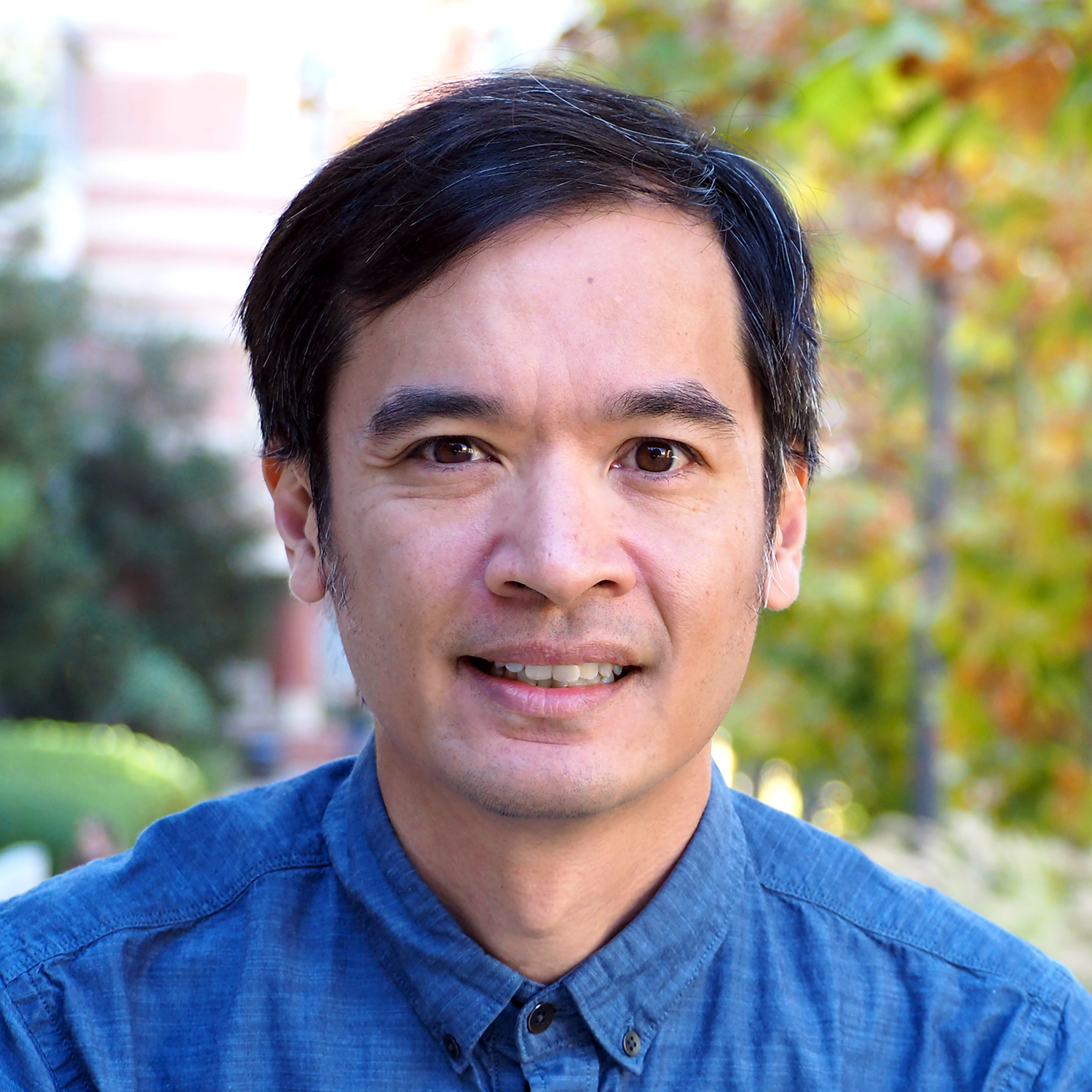
Terence Tao
Terence Tao was born in Adelaide, Australia in 1975. He has been a professor of mathematics at UCLA since 1999, having completed his PhD under Elias Stein at Princeton in 1996. Tao’s areas of research include harmonic analysis, PDE, combinatorics, and number theory. He has received a number of awards, including the Salem Prize in 2000, the Fields Medal in 2006, the MacArthur Fellowship in 2007, the Crafoord prize in 2012, and the Breakthrough Prize in Mathematics in 2015. Terence Tao also holds the James and Carol Collins chair in mathematics at UCLA, and is a Fellow of the Royal Society, the Australian Academy of Sciences, the National Academy of Sciences, and the American Academy of Arts and Sciences. From 2020-2024, he served on the President’s Council of Advisors on Science and Technology.
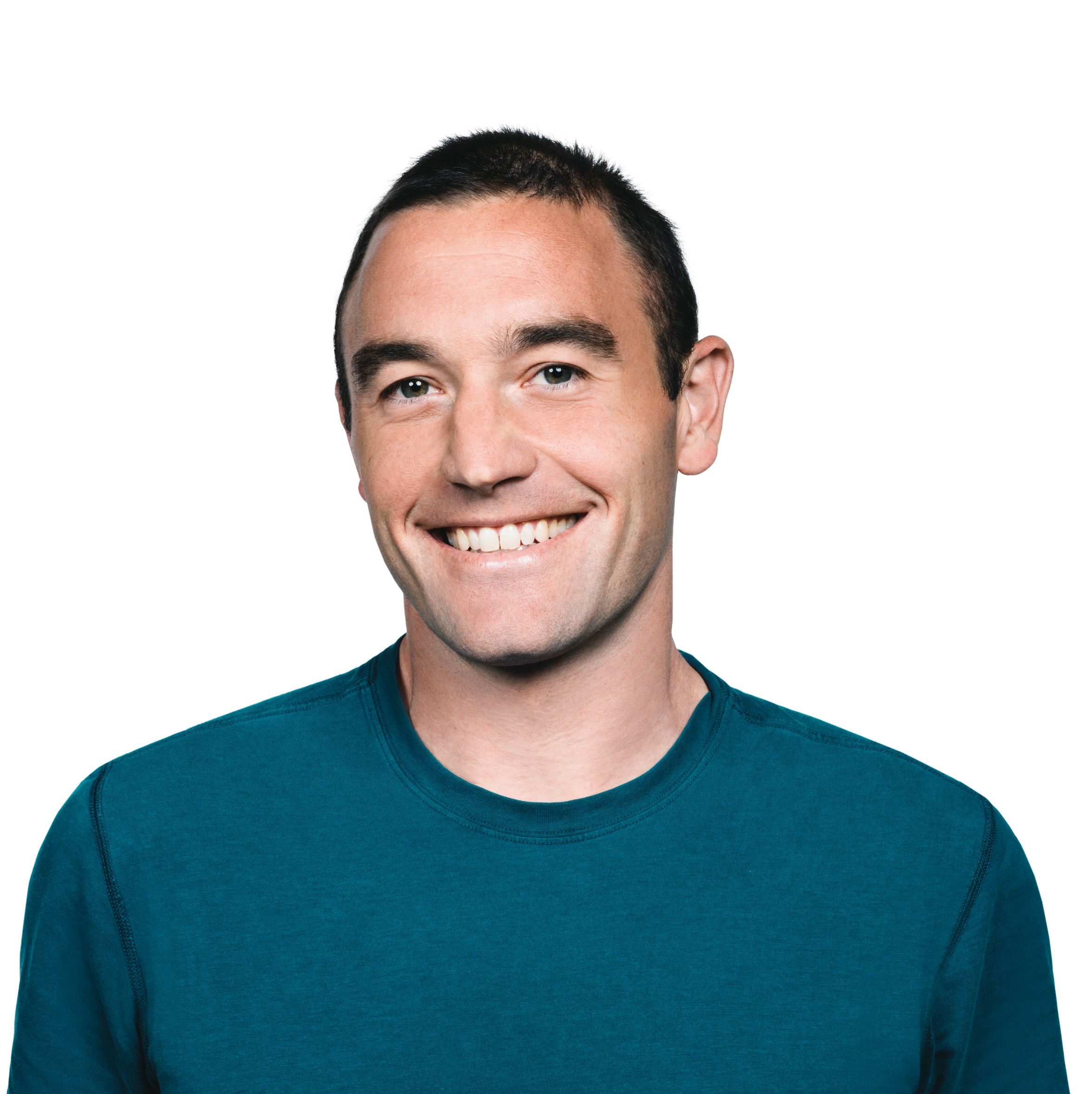
Kevin Weil
Kevin Weil is VP of OpenAI for Science, focused on building the next great scientific instrument: an AI-powered platform that accelerates scientific discovery. Previously, Kevin served as the Chief Product Officer at OpenAI, where he led the teams turning frontier models into products like ChatGPT, Codex, and the OpenAI API.
Before joining OpenAI, Kevin was the President, Product and Business at Planet Labs. He was previously the co-founder of the Libra cryptocurrency and VP of Product for Novi at Facebook, VP of Product at Instagram and SVP of Product at Twitter. Earlier in his career, Kevin held software engineering and data science roles at Cooliris, Tropos Networks, Microsoft Research and the Stanford Linear Accelerator Center.
Kevin graduated summa cum laude in physics and mathematics from Harvard University and has an M.S. in physics from Stanford University. He is a term member of the Council on Foreign Relations (CFR) and serves on the boards of Cisco and The Nature Conservancy. In his spare time, he is an avid ultramarathon runner, racing distances up to 100 miles.
Panelists
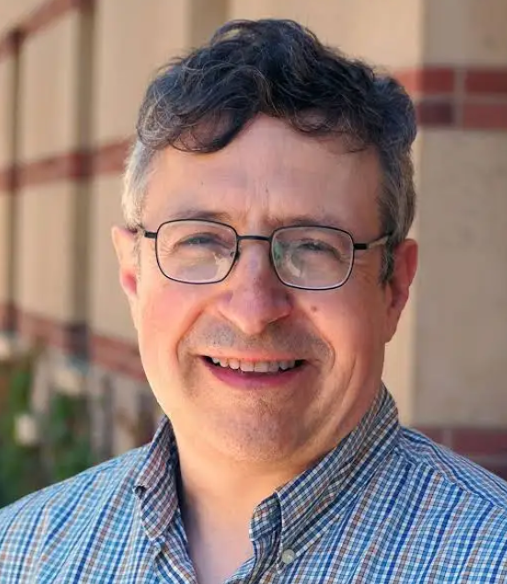
Zvi Bern
Professor Zvi Bern, a UCLA faculty member since 1992, is internationally renowned for his development of innovative approaches to the calculation of fundamental quantities relevant to the interpretation of scattering processes at the subnuclear level. He has also received widespread attention for recent advances in understanding the ultra-high energy properties of supergravity theories. His work is characterized by inspired utilization of the most advanced theoretical methods to carry out complex computations of physical importance. He has developed and applied new ideas for computing and understanding scattering amplitudes to physics at the Large Hadron Collider, to maximally supersymmetric gauge and gravity theories and most recently to gravitational wave physics.
In 2014, Professor Bern, along with his collaborators Lance Dixon (SLAC) and David Kosower (Saclay), received the J.J. Sakurai Prize from the American Physical Society, the highest honor that society can bestow for theoretical work in elementary particle physics. In 2023, again together with Dixon and Kosower, he received the Galileo Galilei Medal from the INFN and Galileo Galilei Institute for Theoretical Physics. In 2024 he was elected to the US National Academy of Sciences.
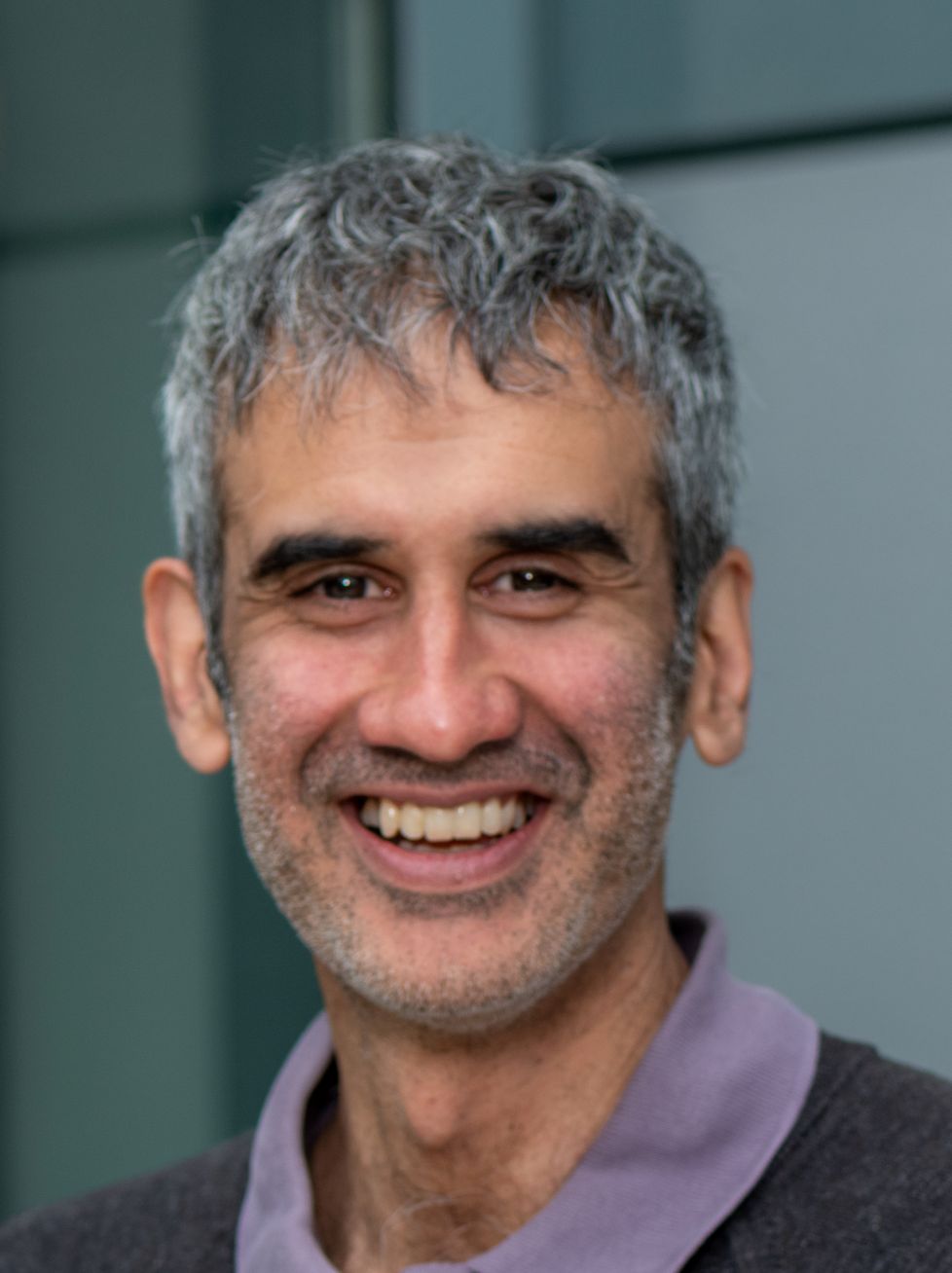
Wahid Bhimji
Wahid is the ‘Division Deputy for AI and Science’ at NERSC, Lawrence Berkeley National Laboratory. He has led several AI projects across different science disciplines and oversees all aspects of AI for NERSC. His current interests include large-compute-scale scientific AI, benchmarking, ‘foundation models’ and the integration of AI with scientific simulation and data analysis. Wahid also has various roles within the Dept. of Energy’s “American Science Cloud” and Genesis initiatives, including building infrastructure for agentic AI. Wahid has worked for over 20 years in Scientific Computing and Data Analysis in Academia and the U.K. Government and has a background and Ph.D. in High-Energy Particle Physics.”
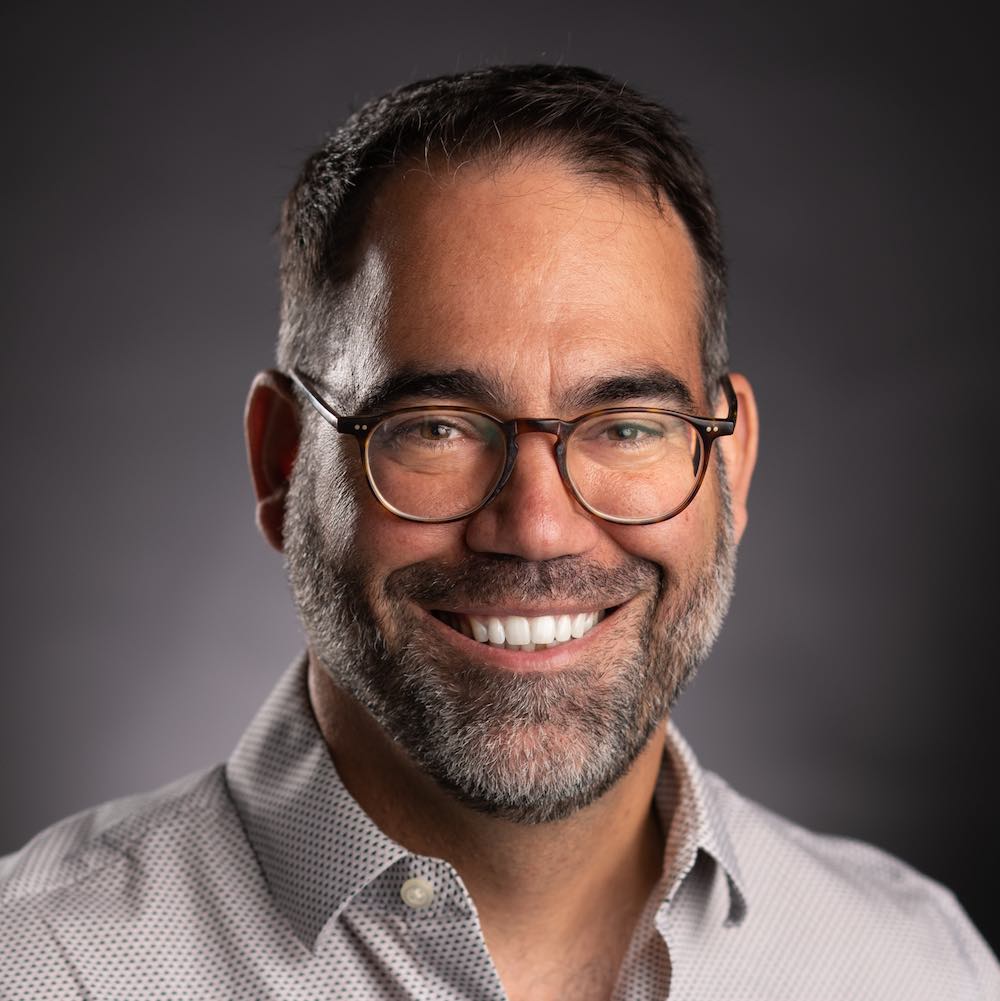
Kyle Cranmer
Kyle Cranmer is the David R. Anderson Director of the UW-Madison Data Science Institute and a Professor of Physics with courtesy appointments in Statistics and Computer Science. He is also the Editor-in-Chief of the journal Machine Learning Science and Technology. He obtained his Ph.D. in Physics from the University of Wisconsin-Madison in 2005. He was awarded the Presidential Early Career Award for Science and Engineering in 2007, the National Science Foundation’s Career Award in 2009, the Breakthrough Prize in Fundamental Physics in 2025, and became a Fellow of the American Physical Society in 2021 for his work related to the discovery of the Higgs boson at the Large Hadron Collider. In November, he also received the inaugural Pritzker Prize for AI and Science.
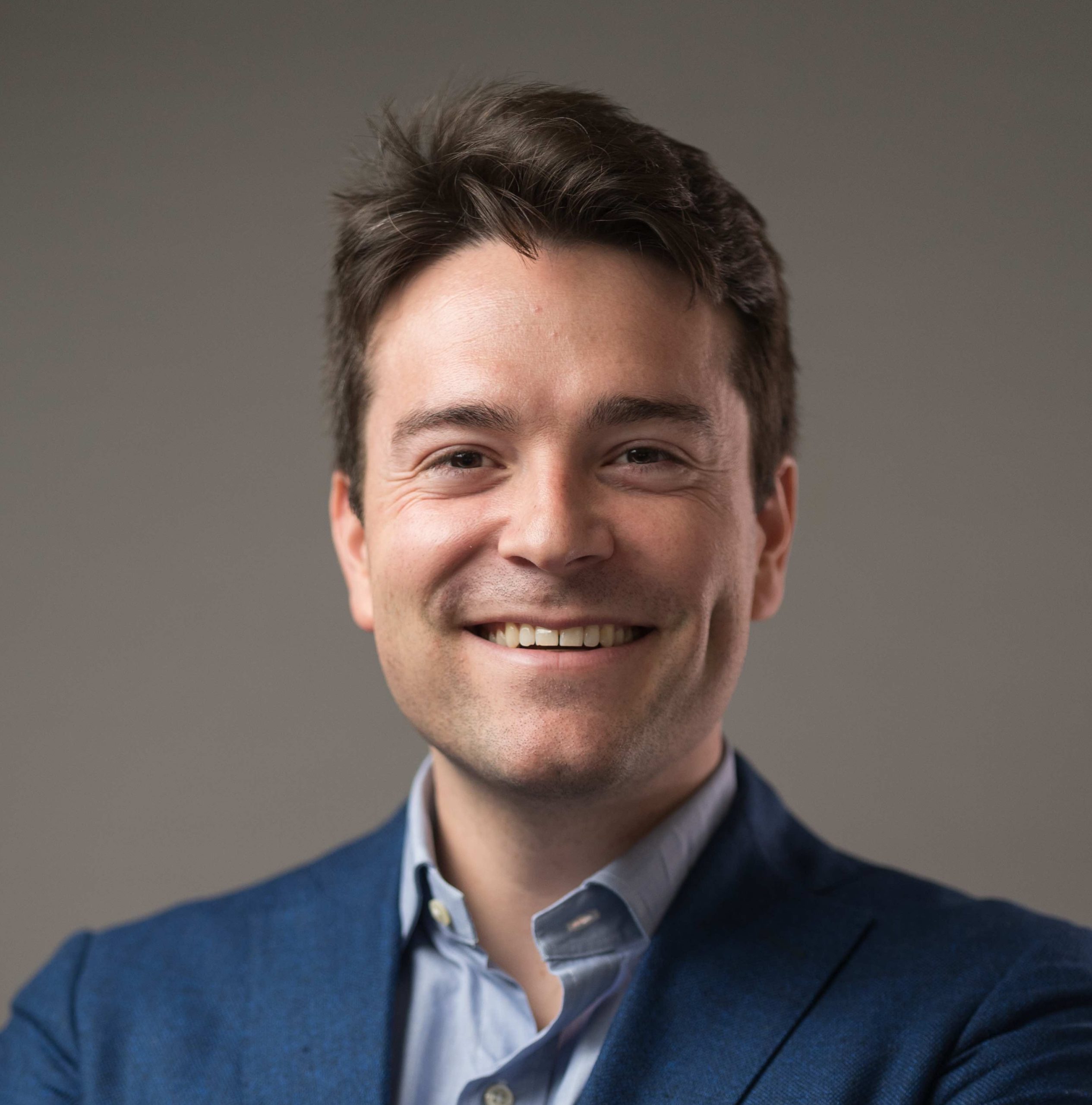
Alex Lupsasca
Alex Lupsasca is a theorist specializing in black holes, classical and quantum gravity, and relativistic astrophysics. He serves as the Project Scientist for the Black Hole Explorer and has been an Assistant Professor of Physics and Mathematics at Vanderbilt University since 2022. He is a co-recipient of the 2024 New Horizons in Physics Prize from the Breakthrough Foundation (together with Michael Johnson) and was also awarded the 2024 IUPAP General Relativity and Gravitation Early Career Scientist Prize from the International Society on General Relativity & Gravitation for his work on black hole imaging. In 2025, Science News Magazine listed him as one of ten “Scientists to Watch” for outstanding contributions to his field, and the Society for Science awarded him the Jon C. Graff, PhD Prize for Excellence in Science Communication. He received his undergraduate and Ph.D. degrees from Harvard University in 2011 and 2017, respectively. He was a Junior Fellow at the Harvard Society of Fellows from 2017 to 2020, before joining the Princeton Gravity Initiative as an Associate Research Scholar from 2020 to 2022.
He is currently developing a NASA mission proposal to launch a satellite into Earth orbit that will take the sharpest images in the history of astronomy: the Black Hole Explorer (BHEX). BHEX is designed to peer all the way down to the event horizon of a black hole and measure the “photon ring” of light that orbits around it. Together with an international team of scientists and engineers, he and his collaborators are designing and prototyping the instruments and spacecraft for BHEX. The team is also preparing to propose BHEX as the next NASA Small Explorers Mission, slated for a 2032 launch. The journey ahead is challenging, but they are excited for BHEX to fly and push our understanding of spacetime to its limits.
He enjoys teaching both undergraduate and graduate courses and giving public talks. His work has been featured in many articles, which can be found on the Press page. He is also interested in innovative ways of visualizing black holes, which has led him to collaborate with Stanford-based artist Pam Davis Kivelson on black hole art and to produce, with his group, various codes and animations listed on the Research page. His team has also developed the Black Hole Vision app, now available on iOS.
Eva Silverstein
Eva Silverstein is a Professor of Physics at Stanford University and a leading theoretical cosmologist. She pioneered testable mechanisms for cosmic inflation derived from the structure of string theory, connecting high-energy and quantum gravitational physics to cosmic microwave background and large scale structure observables. This yields general lessons for early universe cosmology impacting the analysis of cosmic data. Her research also develops methods to obtain a microscopic, holographic accounting of the enormous count of microstates associated with the cosmic horizon.
Silverstein’s contributions to AI research include developing a novel class of algorithms for optimization and sampling based on energy conserving Hamiltonian dynamics, now adopted in precision science applications such as field-level inference. As a PI on the Simons Collaboration on the Physics of Learning and Neural Computation, Silverstein probes the underlying mechanisms of learning and inference in AI, with a recent interest in transformer symmetry-breaking and principled pruning procedures.
Silverstein holds a Simons Investigator award and recently served as the Director of the Stanford Institute for Theoretical Physics (now the Leinweber Institute for Theoretical Physics at Stanford). She is a MacArthur fellow, a fellow of the American Physical Society and a member of the American Academy of Arts and Sciences.